

Undertourism
Aletsch Arena: through the quieter reaches of Switzerland’s world of ice
Jungfraujoch is one of Switzerland’s great high-altitude icons: a railway journey through snow, rock and ice, culminating at Europe’s highest railway station. It distils the drama of the Alps into one intense, unmistakable experience. Across the same UNESCO-listed landscape, the Aletsch Arena replaces a single arrival point with car-free villages, beautiful trails and viewpoints at different elevations. Here, the glacier is encountered in stages, with each stop adding a new sense of scale. This corner of Valais stands on its own as a more flexible route through the Alpine world — shaped by movement, pauses and a constantly changing relationship with the mountains.

The Great Aletsch Glacier, in numbers
The Great Aletsch is the largest glacier in the Alps and, at around 20 kilometres, also its longest. Near Konkordiaplatz, the ice is approximately 800 metres thick. It lies at the heart of the Swiss Alps Jungfrau-Aletsch UNESCO World Heritage Site: a landscape whose monumental proportions make its fragility impossible to ignore.
Car-free villages above the Rhône Valley
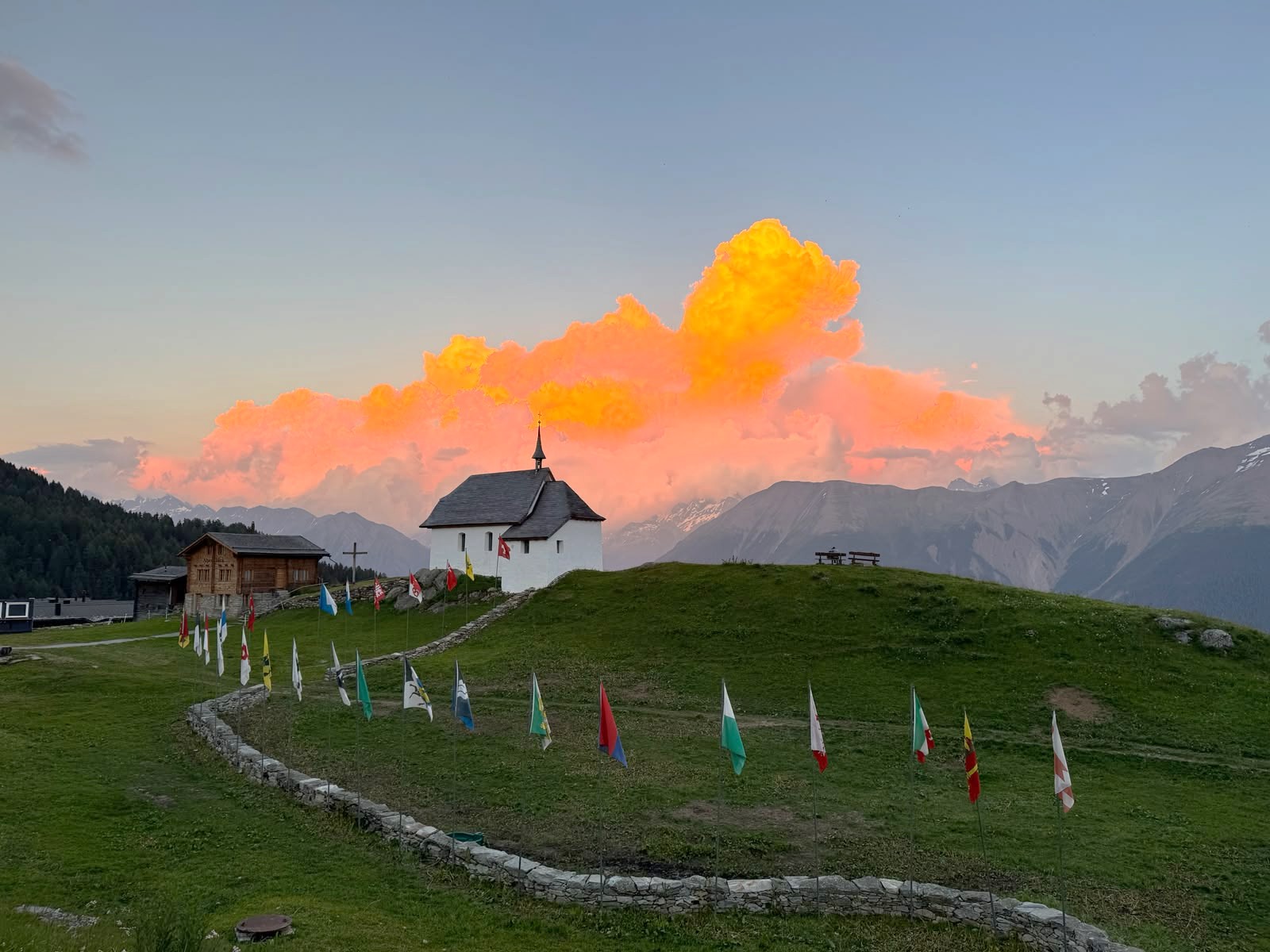
From the Rhône Valley, trains and cable cars climb to Riederalp, Bettmeralp and Fiescheralp, three car-free villages set on a high plateau. The transition is immediate: the valley falls away, traffic gives way to footpaths, and the mountains shift from distant scenery to a constant presence. Despite their proximity, each village has a distinct role. Riederalp draws visitors towards the Aletsch Forest and the viewpoints of Moosfluh and Hohfluh. Bettmeralp places village life, walking trails, mountain lifts and the Bettmersee within easy reach. Further east, Fiescheralp serves as the natural departure point for Eggishorn and for excursions leading closer to the glacier.
Reading the ice from different angles
Across the Aletsch Arena, each viewpoint redraws the glacier. From Hohfluh, its wide curves thread through the mountains beneath a distant line of Alpine peaks. Nearby, Moosfluh opens onto a broader expanse, with the ice stretching alongside high-altitude trails and exposed terrain. At Bettmerhorn, the scale becomes more immediate: the straighter course, sweeping arc and fractured surface can be traced almost line by line. The Panorama-Restaurant Bettmerhorn keeps the glacier in sight over lunch. Higher still, Eggishorn commands the fullest panorama, taking in the glacier’s entire length and some of the Alps’ most recognisable peaks. Together, these vantage points reveal a landscape too vast to be grasped in a single glance.

Eggishorn: the complete picture
At 2,869 metres, Eggishorn is the highest viewpoint in the Aletsch Arena and one of the most compelling places to appreciate the full magnitude of the glacier, with views towards Konkordiaplatz, the Eiger, Mönch and Jungfrau and, on clear days, the Matterhorn. A scenic approach from Bettmeralp can combine the Wurzenbord chairlift and an easy walk of around one hour to Fiescheralp before the final cable-car ascent.
Adventure, stillness and everything between
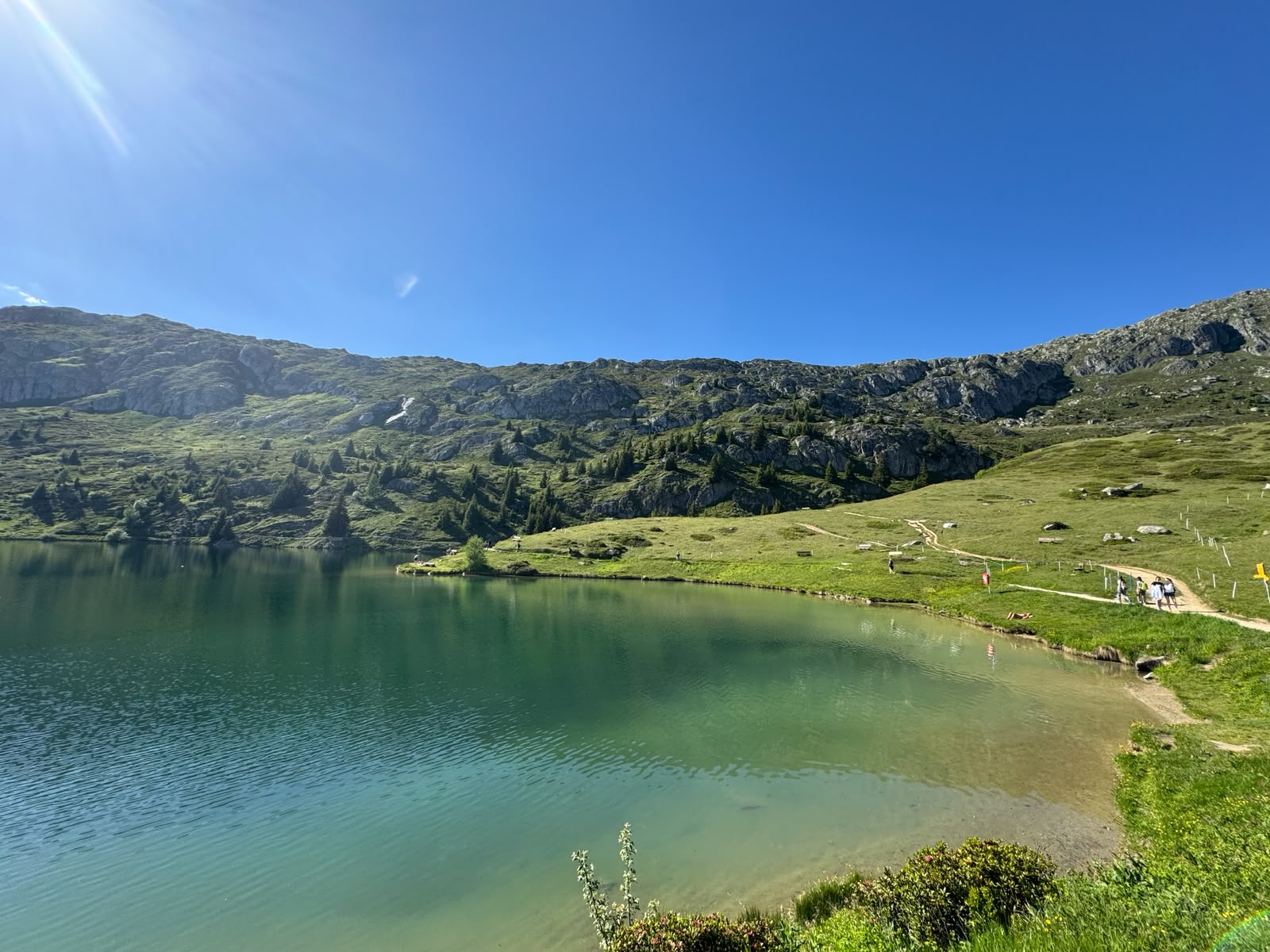
The glacier sets the tone, while the Aletsch Arena leaves the pace remarkably flexible. Organised tours lead safely onto the ice, always with a qualified mountain guide and the appropriate equipment. Glacier access is reserved for these accompanied excursions — an essential safeguard in a landscape as powerful as it is changeable. At the gentler end of the spectrum, the Bettmersee lake lies around ten minutes from the centre of Bettmeralp. Its shoreline lends itself to an easy circuit or a pause along a longer route; in summer, swimming, fishing and pedalos bring a relaxed counterpoint to the high-altitude setting. Trails continue from the lake towards Riederalp and Moosfluh. Between ice and water, short hikes can be linked with cable cars and chairlifts, shaping rewarding days in the Alps suited to a broad range of abilities.
A seamless addition to a Swiss itinerary
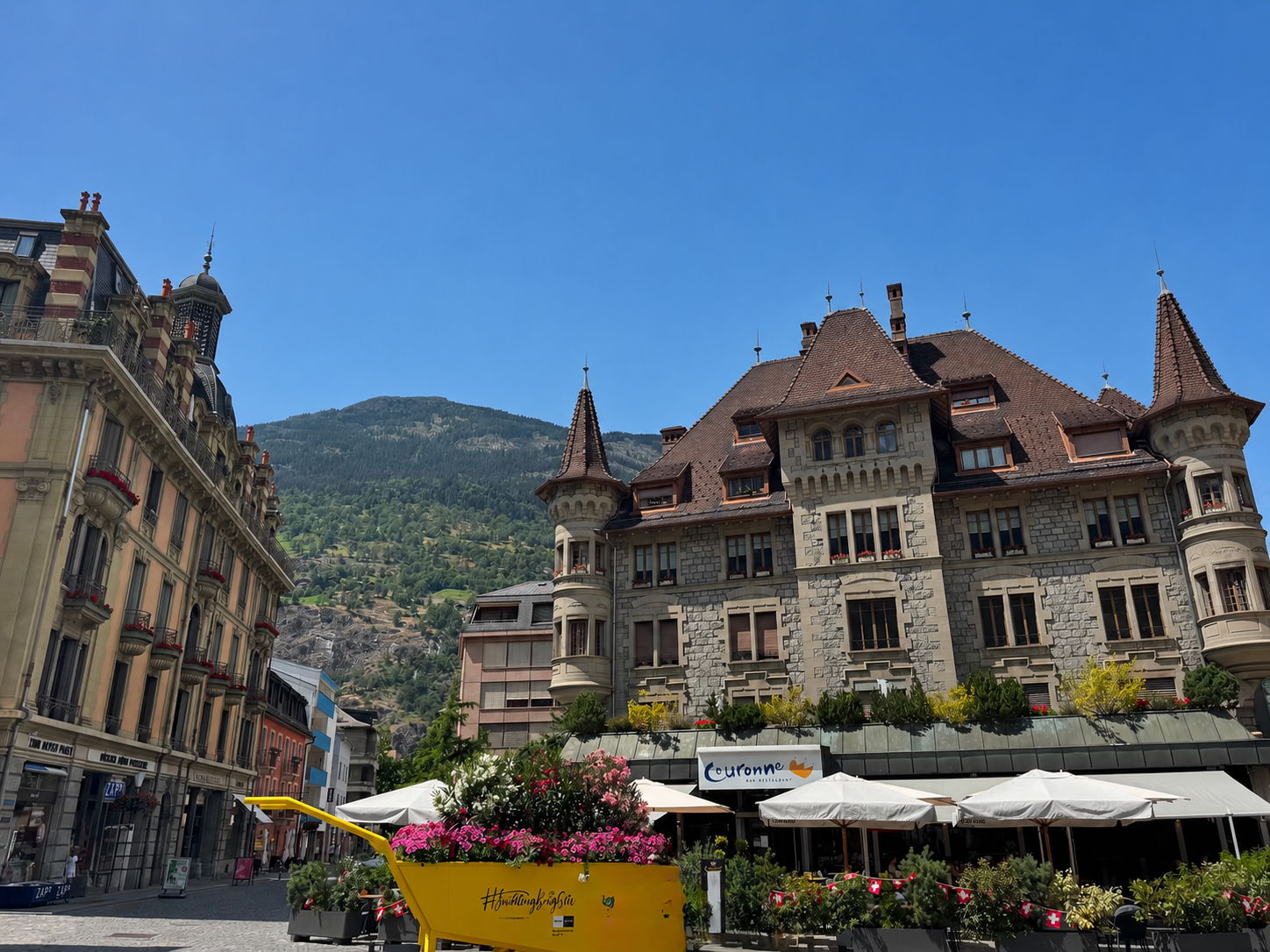
The Aletsch Arena slips easily into a Swiss itinerary. Its public transport connections make it a natural extension to journeys through Valais, Brig or Zermatt, while also linking smoothly with routes through Berne, Interlaken and the Bernese Oberland. Depending on the pace of the programme, it may become a full-day excursion or a one-night stay on the plateau. Trains reach Mörel, Betten Talstation and Fiesch via Brig, with mountain lifts continuing from the valley stations towards the car-free villages. The result is a substantial Alpine chapter that asks remarkably little of the overall travel plan.
Beyond the landmark
This car-free Alpine plateau leaves its deepest impression in the spaces between its landmarks: the silence of a village, the slow ascent of a cable car, the glacier returning from a new angle. Rail, mountain lifts and footpaths carry the journey across villages and viewpoints, turning it into a succession of encounters. Each adds another layer, until the vastness of the landscape begins to feel almost intimate. Its quiet power lies in the way the ice accompanies the journey, changing form as the mountains open around it — its beauty inseparable from the care such a fragile environment demands. Long after the plateau has fallen behind, its presence remains.
Related articles


italyscape@italyscape.com
+39 011 2293208
Lungo Dora Pietro Colletta, 75,
10154
Torino (TO)
10154
Torino (TO)